


Jurassic Drive: Comparing the F-150 and Ranger Raptors
From the slopes of the Rocky Mountains to the forested trails of the Front Range and the wide-open expanse of the High Plains, Colorado is a dream destination for those looking to test their four-wheel mettle against some of the toughest terrain in the country. The Centennial State has long been a destination for ambitious off-roaders, but it can be a little intimidating for those who lack the experience or hardware to tackle the road less traveled.
Luckily help is on the way in the form of two compelling offerings from Ford: the F-150 Raptor and the all-new Ranger Raptor. Built with the pedigree of a desert racing truck, the F-150 Raptor has been turning heads since its debut in 2010, giving drivers a ready-made beast that serves as a one-way ticket to the thrilling world of off-road adventure. If you’re in the market for a Ford F-150 for sale near Rockvale, CO, the Raptor is an alluring option—but it’s not the only rugged, capable pickup to roll off the Ford assembly line as of late.
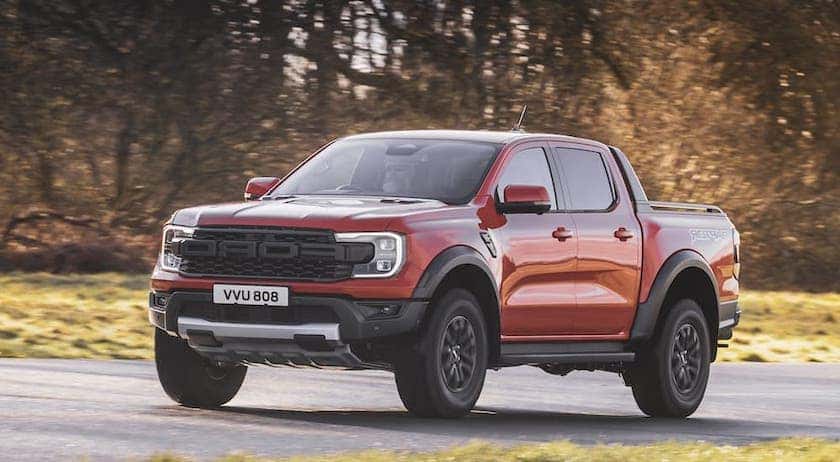
The Ranger Raptor will join the lineup in late 2024, adding a smaller (but no less-well equipped) off-road option for those seeking a midsize pickup that isn’t afraid to get a little dirty. No matter which model you choose, the F-150 Raptor and Ranger Raptor are sure to become a beloved part of your off-road arsenal—but how do these two off-road pickups compare? Read on as we take a closer look at the F-150 Raptor and Ranger Raptor and see how Ford is blazing a new trail in off-road performance.
A Look Back at Prehistoric Times…
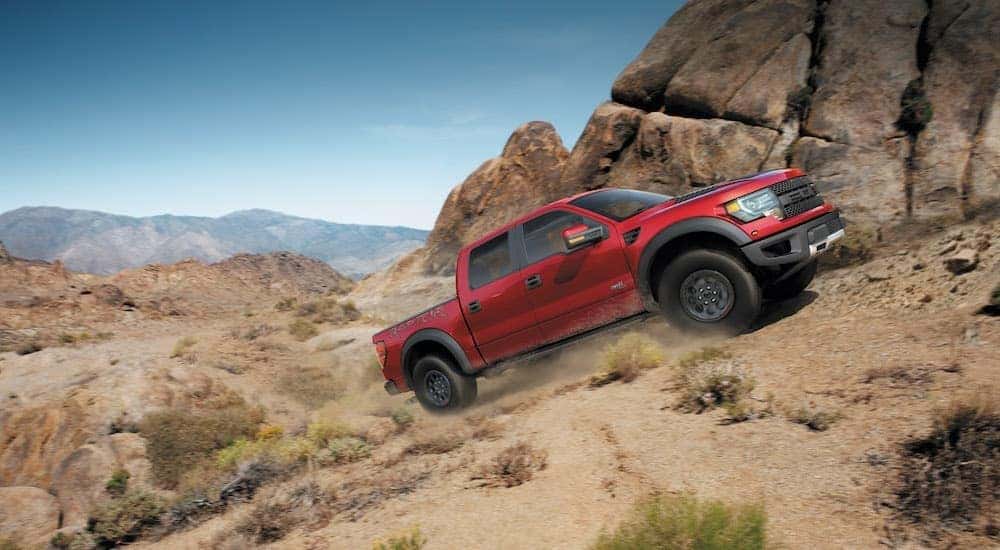
Currently in its third generation, the F-150 Raptor was born from a mad scientist’s laboratory—Ford’s Special Vehicle Team (SVT) division. Tasked with creating unique, high-performance variants of popular Ford models, the SVT took one of the industry’s most iconic vehicles and graced it with a brawny off-road makeover. Drivers got their first look at the high-performance F-150 variant at that famous proving ground for all things off-road: the Baja 1000. This iconic desert race is one of the most grueling events in the world of off-road racing, making it the perfect coming-out party for Ford’s new off-road behemoth.
The F-150 Raptor wasn’t Ford’s first foray in the Baja peninsula; this automaker had competed in the race for years, earning championships in eight of the nine divisions it entered just one year earlier in 2007. Built with Fox Racing internal bypass shocks with external reservoirs, a locking rear differential, a limited-slip front differential, a 6.2L V8 with 411 hp, a wider track, and redesigned rear leaf springs, the F-150 Raptor also marked the debut of Ford’s Hill Descent Control technology. By using the truck’s anti-lock brake system, the F-150 Raptor offered increased control when descending a slope, giving drivers the control and confidence they need to conquer steep off-road terrain.
The F-150 Raptor’s debut was a success by any measure, with the pickup earning third place in the race’s Class 8 category. The best part? Unlike Ford’s previous Baja 1000 entries, the F-150 Raptor was actually available to the public—and they couldn’t get enough of this enticing new pickup. Ford sold just over 7,000 units in 2010 but almost doubled that figure in 2012, with 13,000 F-150 Raptors making their way to customers. Those numbers have been on the rise ever since, with two successive generations of the F-150 Raptor integrating the latest and greatest in off-road tech into America’s best-selling vehicle.
The Ranger Raptor might be the new kid on the block, but it’s got an intriguing history of its own. Introduced in 1983, the Ranger was Ford’s attempt to produce the first domestically-produced compact truck as a means of meeting the strict fuel economy standards of the early 1980s. Built with a focus on quality and efficiency, this compact pickup was a far cry from the midsize pickup that would later wear the Ranger badge, not to mention the Ranger Raptor. Ford’s engineers understood the assignment, developing a pickup that could achieve 20 mph and boast a lower drag coefficient than a Ford Mustang.
The Ranger would continue to evolve over the years and would debut its first off-road guise in 2002 with the Ranger F4X trim. Designed with a manual transfer case, 31-inch all-terrain tires, a limited-slip rear differential, and three skid plates, the F4X was Ford’s first chance to showcase the pickup’s off-road potential. This trim would prove popular but was discontinued following the 2009 model year.
The Ranger brand would take a brief hiatus from 2012 until 2019, when Ford reintroduced the model as a midsize pickup. The fourth generation saw the Ranger come into its own, nixing the two-door designs of the past in favor of four-door SuperCab and SuperCrew configurations and ditching the V6 for a 2.3L turbocharged inline-four that puts out 270 hp and 310 lb-ft of torque. 2019 would also mark the debut of the Ranger’s off-road-focused Raptor variant, although this model was limited to overseas markets.
The first iteration of the Ranger Raptor came with a wider track, raised suspension, an adaptable 4WD system, and a host of additional off-road goodies. The midsize Ranger Raptor provided the perfect alternative to the F-150 Raptor, which was a tough sell on the international market due to its pure bulk. After missing out for the past few years, North American drivers will finally get the chance to experience the Ranger Raptor as Ford makes this model part of its pickup’s fifth-generation lineup.
The North American version of the Ranger Raptor will be nearly identical to its international counterpart with two exceptions: a relocated brake light and an engine that’s been tuned for power-hungry US drivers with 405 hp over the international model’s 392 hp.
Three Sweet Engines
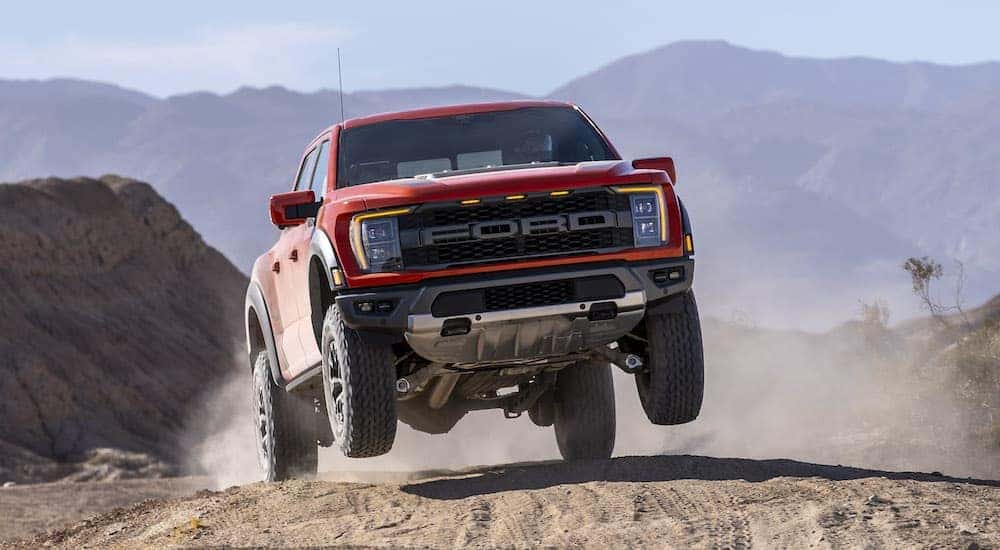
If you’re in the market for the most powerful full-size off-road pickup on the market, you’ll struggle to do better than the Ford F-150 Raptor. The F-150 has long been Ford’s marquee model, giving the brand a chance to flex its automotive engineering muscle—and the 2023 F-150 Raptor is no exception. Powered by a redesigned, high-output version of the brand’s 450-hp twin-turbo 3.5L EcoBoost V6 and paired with a new 3.0-inch exhaust system, the F-150 Raptor can produce 450 hp along with 510 lb-ft of torque—and that’s just for a start.
The ultra-high-performance Raptor R version of the F-150 sees the V6 replaced with a 5.2L V8 that provides a monstrous 700 hp and 640 lb-ft of torque. If those numbers sound familiar, there’s a good reason: it’s the same engine you’ll find in the Shelby GT500, giving this pickup some legit racing pedigree that makes the Raptor one of the most exciting F-150s in Ford’s long tenure. Sure, we might not strictly need a full-size pickup that can rush from zero to sixty in 3.6 seconds with a top speed of 114 mph; still, there’s no denying the amount of excitement it can provide.
The 2024 Ranger Raptor shares its engine with Ford’s off-road SUV offering, the Bronco Raptor, with a 3.0L twin-turbo V6 doing the heavy lifting. Mated to a ten-speed automatic transmission and specialized active exhaust system, the Ranger Raptor’s sole engine option can churn out 405 hp and 430 lb-ft of torque, which should be more than enough for all but the most extreme off-road maneuvers.
That’s slightly less power than you’ll enjoy on the Bronco Raptor, which measures in at around 418 hp and 440 lb-ft of torque, but the Ranger is also more than 400 lbs lighter at 5,350 lbs, giving this pickup a far more impressive power-to-weight ratio that allows it to speed from zero to sixty in 5.8 seconds. (Again, our excitement is uncontainable.)
Off-Road Equipment
Power aside, pickups like the F-150 Raptor and Ranger Raptor are always going to be measured by their off-road gear. From locking differentials and upgraded suspensions to all-terrain tires, heat extractors, improved approach, departure, and breakover angles, and more, the F-150 Raptor and Ranger Raptor manage to justify their higher-than-average price tags with a long list of heavy-duty off-road gear.
While these two models differ when it comes to specific components, one thing is for sure: these are not surface-level trims aimed at giving established Ford models an off-road look; they’re full-fledged packages that would allow any driver to head straight from the dealership to the nearest off-road trails.
If the F-150 Raptor’s Baja 1000 resume isn’t reason enough for you to give this pickup a test drive, its full suite of off-road equipment makes a compelling case all on its own. An overhauled suspension with Fox Live Valve racing shocks and a five-link rear coil-spring design go a long way in smoothing out the bumps and bruises that can come with aggressive off-road driving, and 35-inch BFGoodrich all-terrain tires ensure you’ll always have traction when you need it most. The Raptor also has 1.1 inches more ground clearance than the standard F-150, which can come in handy when you’re trying to overcome off-road obstacles or protect your undercarriage from dings and dents.
If the worst does come to pass, have no fear, as the F-150 Raptor is loaded with steel bash plates, a steel front bumper, and plenty of protection for the engine, transmission, fuel tank, transfer case, and other sensitive parts. On the tech side of the equation, the F-150 Raptor comes standard with seven distinct drive modes—Normal, Tow/Haul, Sport, Slippery, Off-Road, Rock/Crawl, and Baja—that give drivers the ability to tackle varying terrain with ease.
Due to its higher weight, upgrading to the high-end F-150 Raptor R will add stiffened front springs and freshly tuned dampers to the mix, as well as carbon fiber accents, leather and microsuede upholstery, and Recaro front seats on the interior. This pickup can tow 200 lbs more than the base F-150, upping its payload to 1,400 lbs and towing capacity to an impressive 8,200 lbs.
Given its relatively modest price tag (about $20k less than the F-150 Raptor), it’s no surprise to learn that the midsize Ranger Raptor isn’t quite as well-outfitted when it comes to off-road gear. That said, Ford has still managed to deliver a well-rounded off-roader for the price, giving drivers who balk at the F-150 Raptor’s size and price an alluring new option.
Electronically controlled front and rear locking differentials are par for the course in the world of off-road models, but Ford has upped the ante by revising the clutch and transfer case to outshine the competition, especially when it comes to the world of desert racing. The Ranger Raptor also boasts improved suspension travel over the regular Ranger—1.4 inches front and 2.7 inches rear—which can largely be credited to new upper and lower aluminum front control arms that add 3.5 inches to the front track. The Raptor model also has 1.4 inches more ground clearance than the original and is designed with off-road-focused approach, departure, and breakover angles.
All the ground clearance and suspension travel in the world is great, but it doesn’t count for much if you’re being jostled around too much to enjoy the ride. The Ranger Raptor’s 2.5-inch Fox Live Valve Internal Bypass shocks do their part to help, with Teflon-infused oil to reduce heat buildup and position-sensitive damping that can adjust in the middle of a particularly hard bounce to give your backside a little relief. The damping effects are tied to the seven drive mode’s this pickup shares with its larger F-150 cousin, giving drivers a chance to excel on a wide variety of terrain.
True to its desert racing heritage, the Ranger Raptor is also available with beadlock-capable wheels, making it easy to prevent getting mired in the sand, mud, or other loose surfaces by letting a little air out of the tires.
These Raptors Will Have You Saying “…Clever Girl.”
The Ford F-150 Raptor and Raptor Ranger make a strong case for injecting a little off-road fun into your daily driving routine. With a host of powerful engines, redesigned bodies, and a full slate of burly off-road equipment, these well-equipped models make it easier than ever to break into the world of off-roading.
These two pickups are perfectly suited to the rigors of driving in Colorado, where off-road features can come in handy even when sticking to paved surfaces. From sudden winter storms to driving rains, wind, and low temperatures, the traction, control, and confidence offered by the F-150 Raptor and Ranger Raptor can make the difference between a leisurely jaunt and a stressful white-knuckle experience.
The F-150 Raptor is the perfect choice for those in the market for a no-holds-barred off-road beast that delivers unrivaled performance, but for those in the market for something a little more practical as a daily driver, the Ranger Raptor is a compelling addition to Ford’s lineup. Still can’t decide? Stop by The Faricy Boys Ford today and try one of these tempting off-road models for yourself.
0 comment(s) so far on Jurassic Drive: Comparing the F-150 and Ranger Raptors